Dactolisib (BEZ235)

Katalog-Nr.S1009 Charge:S100916

Drucken

Technische Daten

Formel

C30H23N5O

Molekulargewicht 469.55 CAS-Nr. 915019-65-7
Löslichkeit (25°C)* In vitro 5%TFA 1.67 mg/mL mit 50 °C warmem Wasserbad erwärmt (3.55 mM)
DMSO 0.01 mg/mL (0.02 mM)
Water Insoluble
* <1 mg/ml bedeutet schwer löslich oder unlöslich.
* Bitte beachten Sie, dass Selleck die Löslichkeit aller Verbindungen intern testet und die tatsächliche Löslichkeit geringfügig von veröffentlichten Werten abweichen kann. Dies ist normal und ist auf geringfügige Batch-zu-Batch-Variationen zurückzuführen.
* Versand bei Raumtemperatur (Stabilitätstests zeigen, dass dieses Produkt ohne Kühlmaßnahmen versendet werden kann.)

Vorbereitung von Stammlösungen

Biologische Aktivität

Beschreibung Dactolisib (BEZ235, NVP-BEZ235) ist ein dualer ATP-kompetitiver PI3K- und mTOR-Inhibitor für p110α/γ/δ/β und mTOR(p70S6K) mit IC50-Werten von 4 nM /5 nM /7 nM /75 nM /6 nM in zellfreien Assays. Er hemmt ATR mit einem IC50-Wert von 21 nM in 3T3TopBP1-ER-Zellen, induziert Autophagy und unterdrückt die HIV-1-Replikation. Phase 2.
Ziele
p110α
(Cell-free assay)
p110γ
(Cell-free assay)
mTOR (p70S6K)
(Cell-free assay)
p110δ
(Cell-free assay)
ATR
(3T3TopBP1-ER cells)
Mehr anzeigen
4 nM 5 nM 6 nM 7 nM 21 nM
In vitro Dactolisib (BEZ235) reduziert signifikant die Phosphorylierungsgrade der mTOR-aktivierten Kinase p70S6K. Dies führt zu einer Reduktion der S235/S236P-RPS6-Spiegel mit einer IC50 von 6,5 nM. Die Aktivität dieser Verbindung gegen mTOR wird mittels eines biochemischen mTOR K-LISA-Assays mit einer IC50 von 20,7 nM bestimmt. Sie zeigt eine geringfügig niedrigere Aktivität gegen ihr β-Paralog mit einer IC50 von 75 nM. Der PI3K/Akt/mTOR-Signalweg ist in menschlichen Tumorzellen oft konstitutiv aktiviert. BEZ235 blockiert die PI3K- und mTOR-Kinaseaktivität durch Bindung an die ATP-Bindungsspalte dieser Enzyme. Beide PTEN-null-Zelllinien PC3M und U87MG zeigen eine dosisabhängige Reduktion der Zellproliferation, wenn sie mit steigenden Konzentrationen davon behandelt werden, mit einer durchschnittlichen GI50 von 10-12 nM. Es ist ein mTORC1/2-katalytischer Inhibitor.
In vivo Dactolisib (BEZ235) induziert eine Regression der Tumoren (69%) ohne statistisch signifikante Auswirkungen auf die Körpergewichtszunahme. Insgesamt zeigen diese vorläufigen In-vivo-Wirksamkeitsergebnisse, dass es bei oraler Verabreichung als Einzelwirkstoff eine Krankheitsstase bewirkt und die Wirksamkeit anderer Antikrebsmittel in Kombinationsstudien erhöhen kann.

Protokoll (aus Referenz)

Kinase-Assay:

[1]

  • In vitro Proteinkinase-, PI3K- und mTOR-Assays

    PI3Kα-, β- und δ-Proteine bestehen aus der iSH2-Domäne von p85, NH2-terminal an das Vollängenprotein p110 fusioniert, mit Ausnahme von α, das auch die letzten 20 Aminosäuren nicht enthält. PI3Kγ wird als Vollängenprotein produziert, dem die ersten 144 Aminosäuren fehlen. Alle Konstrukte sind zur bequemen Reinigung mit einem COOH-terminalen His-Tag fusioniert und dann in die pBlue-Bac4.5 (für α-, β- und δ-Isoformen) oder pVL1393 (für γ-Isoform) Plasmide kloniert. Die verschiedenen Vektoren werden dann mit BaculoGold WT genomischer DNA kotransfiziert, unter Verwendung der vom Hersteller empfohlenen Methoden zur Produktion der jeweiligen rekombinanten Baculoviren und Proteine. Dactolisib (BEZ235) wird mittels eines Kinase-Glo-Assays auf seine Aktivität gegen PI3K getestet. Die Kinase-Reaktion wird in einer schwarzen 384-Well-Platte durchgeführt. Jedes Well wird mit 50 μL Testsubstanzen (in 90% DMSO) und 5 μL Reaktionspuffer beladen, der 10 μg/mL PI-Substrat (l-α-Phosphatidylinositol; Avanti Polar Lipids; hergestellt in 3% Octylglucosid) und die PI3K-Proteine (10, 25, 10 und 150 nM von p110α, p110β, p110δ bzw. p110γ) enthält, die dann hinzugefügt werden. Die Reaktion wird durch Zugabe von 5 μL 1 μM ATP, zubereitet im Reaktionspuffer, gestartet und entweder 60 (für p110α, p110β und p110δ) oder 120 min (für p110γ) inkubiert. Sie wird durch Zugabe von 10 μL Kinase-Glo-Puffer beendet. Die Platten werden dann in einem Synergy 2 Reader zur Lumineszenzdetektion ausgelesen.

Zell-Assay:

[2]

  • Zelllinien

    HCT116, DLD-1 and SW480 cells

  • Konzentrationen

    0-1 μM

  • Inkubationszeit

    48 hours

  • Methode

    The human CRC cell lines, HCT116 (PIK3CA mutant; kinase domain at H1047R), DLD-1 (PIK3CA mutant; helical domain at E545K), and SW480 (PIK3CA wild-type) and isogenic DLD-1 PIK3CA mutant as well as wild-type cells are maintained in DMEM with 10% FBS and 1 × Penicillin/Streptomycin. Cells are plated at different initial densities (HCT116: 3 × 10³ cells/well, DLD-1: 5.5 × 10³ cells/well, SW480: 4.5 × 10³ cells/well, DLD-1 PIK3CA mutant: 7 × 10³ cells/well, and DLD-1 PIK3CA wild-type: 9 × 10³ cells/well) to account for differential growth kinetics. After 16 hours, cells are incubated with increasing concentrations of Dactolisib (BEZ235), and the drug-containing growth medium is changed every 24 hours. Cell viability is assessed 16 hours after the initial plating and 48 hours after initiation of treatment with this compound using the colorimetric MTS assay CellTiter 96® AQueous One Solution Cell Proliferation Assay, as per the manufacturer's instructions. Cell viability after drug treatment is normalized to that of untreated cells also grown for 48 hours. For western blot analysis, cells are plated with zero or maximum inhibitory dose (500 nM) of it for 2, 6, 24, or 48 hours.

Tierstudie:

[1]

  • Tiermodelle

    Female Harlan athymic nude mice

  • Dosierungen

    45 mg/kg

  • Verabreichung

    p.o.

Referenzen

  • https://pubmed.ncbi.nlm.nih.gov/18606717/
  • https://pubmed.ncbi.nlm.nih.gov/21966435/
  • https://pubmed.ncbi.nlm.nih.gov/21791089/
  • https://pubmed.ncbi.nlm.nih.gov/20606035/
  • https://pubmed.ncbi.nlm.nih.gov/21412767/
  • https://pubmed.ncbi.nlm.nih.gov/22662154/
  • https://pubmed.ncbi.nlm.nih.gov/20876803/
  • https://pubmed.ncbi.nlm.nih.gov/21552262/

Kundenproduktvalidierung

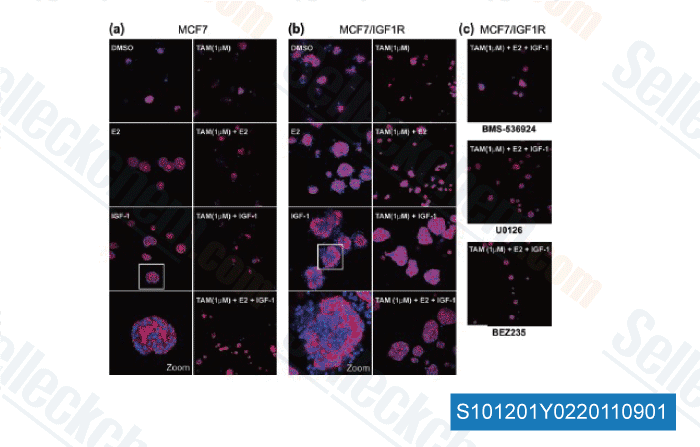
<p>Three-dimensional responses of MCF7/IGF-1R cells to TAM (1 μM), E2 and IGF-1. Compared to parental MCF7 cells (a), MCF7/IGF-1R cells (b) in three-dimensional (3D) culture formed bigger acini in response to IGF-1 stimulation and displayed significant TAM resistance when treated with TAM (1 μM) + E2 + IGF-1, which was removable by kinase inhibitors BMS-536924, U0126 and BEZ235 (c). Cells (10,000/well) were seeded in 96-well plates. Acini were formed on 100% Matrigel and cultured for 14 days in starving medium containing 2% Matrigel and 5% charcoal/dextran-stripped fetal bovine serum with the treatments as indicated. Concentrations used: TAM (1 μM), E2 (1 nM) and IGF-1 (100 ng/mL). Confocal image original magnification, × 20. Red, rhodamine phalloidin (actin). Blue, Hoechst blue stain. Results are representative of two individual experiments.</p>

Daten von [ Breast Cancer Res , 2011 , 13, R52 ]
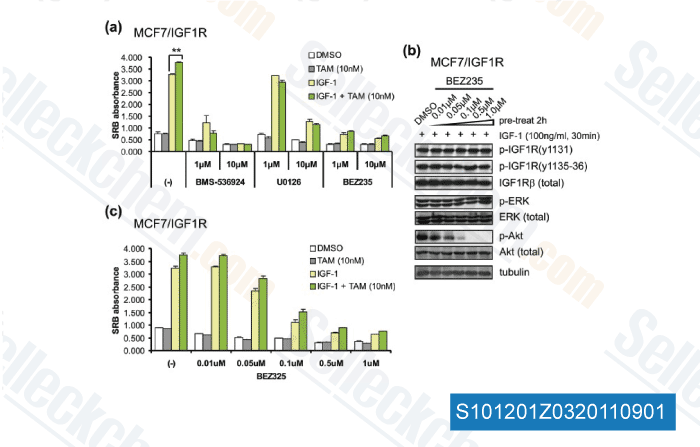
<p>TAM (10 nM) agonistic behavior in MCF7/IGF-1R cells is not inhibited by phosphatidylinositol 3-kinase/Akt inhibitor BEZ235. (a) Inhibitory effects of kinase inhibitors BMS-536924, U0126 and BEZ235 on agonistic effect of TAM (10 nM) in the presence of IGF-1 (100 ng/mL). **P < 0.01. (b) Inhibitory effects of phosphatidylinositol 3-kinase (PI3K)/Akt inhibitor BEZ235 at various dose ranges on IGF-1R signaling. (c) Agonistic behavior of TAM (10 nM) in response to BEZ235 kinase inhibitor. (-), no BEZ235. Results are representative of three independent experiments. Data are expressed as means ± SD.</p>

Daten von [ Breast Cancer Res , 2011 , 13:R52 ]
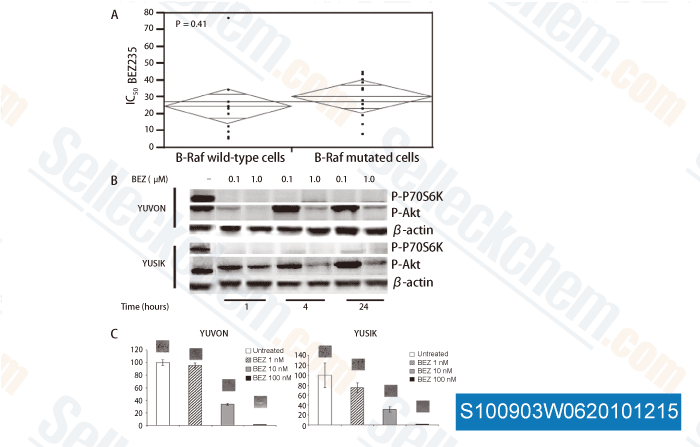
<p>A, ANOVA of IC50 values of the dual PI3K/mTOR inhibitor NVP-BEZ235 in 23 melanoma cell lines showing no significant difference in sensitivity to this compound in B-Raf mutant and Braf wild-type cells. B, decreases in pAkt and pP70S6K in a dose and time-dependent fashion in 2 melanoma cell lines treated with NVP-BEZ235. pP70S6K levels are undetectable at all concentrations and time points studied, whereas levels of pAkt start rising again after 4 hours of drug exposure in a dose-dependent fashion. C, clonogenic assays in 2 melanoma cell lines (YUVON and YUSIK) treated with NVP-BEZ235 at different concentrations. NVPBEZ235 was effective in inhibiting colony formation at low nanomolar concentrations.</p>

Daten von [ Clin Cancer Res , 2010 , 16, 6029-6039 ]
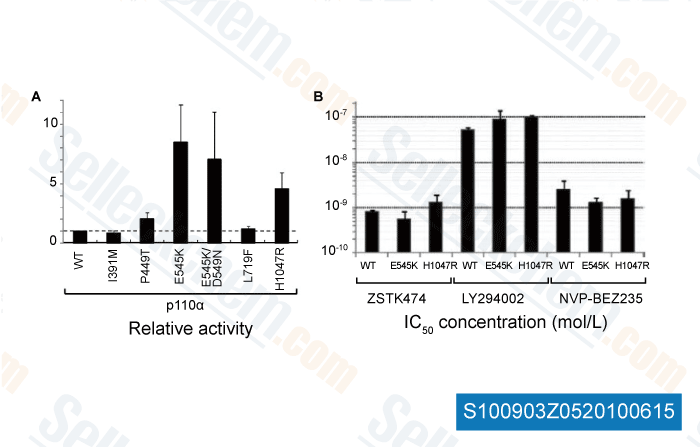
<p>Relative kinase activities of p110α mutants and the inhibitory effect of PI3K inhibitors against hotspot mutants of p110α. A, recombinant FLAG-tagged PI3K p110α/p85α protein complex produced in 293T cells was immunoprecipitated , and the immunoprecipitates were used for the quantitative PI3K-HTRF assay (32).</p><div><div>B, effect of three PI3K inhibitors (ZSTK474, LY294002, and NVP-BEZ235) on the enzymatic activity of two hotspot mutants (E545K and H1047R) p110α compared with the wild-type. No striking difference was observed in the IC50 concentrations of these inhibitors between wild-type and mutant p110α.</div><div> </div></div><p> </p>

Daten von [ Cancer Res , 2010 , 70, 4982-4994 ]

Sellecks Dactolisib (BEZ235) Wurde zitiert von 519 Publikationen

Neuroimmune Microenvironment Reprogramming via Immuno-piezoelectric Transducers for Synergistic Stem Cell Therapy in Traumatic Brain Injury [ Adv Mater, 2025, e12810.] PubMed: 41030193
Ataluren improves hematopoietic and pancreatic disorders in Shwachman-Diamond syndrome patients: a compassionate program case-series [ Nat Commun, 2025, 16(1):8189] PubMed: 40897730
TIGIT deficiency promotes autoreactive CD4+ T-cell responses through a metabolic‒epigenetic mechanism in autoimmune myositis [ Nat Commun, 2025, 16(1):4502] PubMed: 40374622
Spatial covariance reveals isothiocyanate natural products adjust redox stress to restore function in alpha-1-antitrypsin deficiency [ Cell Rep Med, 2025, 6(1):101917] PubMed: 39809267
Heterogeneous Activation of Signaling Pathways and Therapeutic Vulnerabilities in KSHV-Associated Primary Effusion Lymphoma Cell Lines [ J Med Virol, 2025, 97(8):e70534] PubMed: 40751690
Macrophage CCL7 promotes resistance to immunotherapy for colorectal cancer by regulating the infiltration of macrophages and CD8+ T cells [ J Immunother Cancer, 2025, 13(11)e013027] PubMed: 41290259
YAP1 promoter-associated noncoding RNA affects Ewing sarcoma cell tumorigenicity by regulating YAP1 expression [ Cell Mol Biol Lett, 2025, 30(1):63] PubMed: 40414844
Perilipin2-dependent lipid droplets accumulation promotes metastasis of oral squamous cell carcinoma via epithelial-mesenchymal transition [ Cell Death Discov, 2025, 11(1):30] PubMed: 39875372
Depleting the action of EZH2 through PI3K-mTOR inhibition to overcome metastasis and immunotherapy resistance in triple-negative breast cancer [ Mol Cancer Ther, 2025, 10.1158/1535-7163.MCT-24-0693] PubMed: 40497697
Changes in Melanoma Cell Morphology Following Inhibition of Cell Invasion by Third-Generation mTOR Kinase Inhibitors [ Int J Mol Sci, 2025, 26(16)7770] PubMed: 40869090

RÜCKGABERICHTLINIE
Die bedingungslose Rückgaberichtlinie von Selleck Chemical gewährleistet unseren Kunden ein reibungsloses Online-Einkaufserlebnis. Wenn Sie in irgendeiner Weise mit Ihrem Kauf unzufrieden sind, können Sie jeden Artikel innerhalb von 7 Tagen nach Erhalt zurückgeben. Im Falle von Produktqualitätsproblemen, sei es protokollbezogene oder produktbezogene Probleme, können Sie jeden Artikel innerhalb von 365 Tagen ab dem ursprünglichen Kaufdatum zurückgeben. Bitte befolgen Sie die nachstehenden Anweisungen, wenn Sie Produkte zurücksenden.

VERSAND UND LAGERUNG
Selleck-Produkte werden bei Raumtemperatur transportiert. Wenn Sie das Produkt bei Raumtemperatur erhalten, seien Sie versichert, dass die Qualitätskontrollabteilung von Selleck Experimente durchgeführt hat, um zu überprüfen, dass die normale Temperaturplatzierung von einem Monat die biologische Aktivität von Pulverprodukten nicht beeinträchtigt. Nach dem Sammeln lagern Sie das Produkt bitte gemäß den in der Datenblatt beschriebenen Anforderungen. Die meisten Selleck-Produkte sind unter den empfohlenen Bedingungen stabil.

NICHT FÜR DIE ANWENDUNG AM MENSCHEN, FÜR VETERINÄRMEDIZINISCHE DIAGNOSTIK ODER THERAPEUTISCHE ZWECKE.