Celecoxib (SC-58635)

Katalog-Nr.S1261 Charge:S126106

Drucken

Technische Daten

Formel

C17H14F3N3O2S

Molekulargewicht 381.37 CAS-Nr. 169590-42-5
Löslichkeit (25°C)* In vitro DMSO 100 mg/mL (262.21 mM)
Ethanol 76 mg/mL (199.28 mM)
Water Insoluble
In vivo (Lösungsmittel einzeln und der Reihe nach zum Produkt hinzufügen.)
Homogeneous suspension
CMC-NA
≥5mg/ml Taking the 1 mL working solution as an example, add 5 mg of this product to 1 ml of CMC-Na solution, mix evenly to obtain a homogeneous suspension with a final concentration of 5 mg/ml.
Clear solution
10%DMSO 40%PEG300 5%TWEEN80 45%ddH2O

Validiert von Selleck Labs. Sollten Sie Anpassungen an dieser Formulierung benötigen, wenden Sie sich an unser Vertriebsteam für kundenspezifische Tests.

5.000mg/ml (13.11mM) Taking the 1 mL working solution as an example, add 100 μL of 50 mg/ml clarified DMSO stock solution to 400 μL of PEG300, mix evenly to clarify it; add 50 μL of Tween80 to the above system, mix evenly to clarify; then continue to add 450 μL of ddH2O to adjust the volume to 1 mL. The mixed solution should be used immediately for optimal results. 
* <1 mg/ml bedeutet schwer löslich oder unlöslich.
* Bitte beachten Sie, dass Selleck die Löslichkeit aller Verbindungen intern testet und die tatsächliche Löslichkeit geringfügig von veröffentlichten Werten abweichen kann. Dies ist normal und ist auf geringfügige Batch-zu-Batch-Variationen zurückzuführen.
* Versand bei Raumtemperatur (Stabilitätstests zeigen, dass dieses Produkt ohne Kühlmaßnahmen versendet werden kann.)

Vorbereitung von Stammlösungen

Biologische Aktivität

Beschreibung Celecoxib ist ein selektiver COX-2-Inhibitor mit einer IC50 von 40 nM in Sf9-Zellen.
Ziele
COX-2
(Sf9 cells)
40 nM
In vitro

Celecoxib zeigt eine geringe Empfindlichkeit gegenüber COX-1 mit einer IC50 von 15 μM. Diese Verbindung zeigt eine antiproliferative Wirkung auf Zelllinien des Nasopharynxkarzinoms (NPC) einschließlich HNE1 und CNE1-LMP1 mit einer IC50 von 32,86 μM bzw. 61,31 μM.

In vivo

Celecoxib zeigt eine potente, orale entzündungshemmende Aktivität. Diese Verbindung reduziert akute Entzündungen im Carrageenan-Ödem-Assay und chronische Entzündungen im Adjuvans-Arthritis-Modell mit einer ED50 von 7,1 mg/kg bzw. 0,37 mg/kg/Tag. Darüber hinaus zeigt es auch eine analgetische Aktivität im Hargreaves-Hyperalgesie-Modell mit einer ED50 von 34,5 mg/kg. Außerdem verursacht diese Chemikalie bei Ratten keine akute GI-Toxizität bei Dosen von bis zu 200 mg/kg und keine chronische GI-Toxizität bei Ratten bei Dosen von bis zu 600 mg/kg/Tag über 10 Tage. In einem C3Hf/KamLaw weiblichen Mausmodell erhöht es die mediane Überlebenszeit von 105 Tagen (Bereich, 79-145 Tage) nach 13,5 Gy lokaler thorakaler Bestrahlung (LTI) allein auf 142 Tage (Bereich, 94-155 Tage).

Protokoll (aus Referenz)

Kinase-Assay:

[1]

  • COX-Enzymtest in vitro

    Die Expression des COX-Proteins in Insektenzellen wird durch die Bestimmung der PG-synthetischen Fähigkeit in Homogenaten aus Zellen bestimmt, die 3 Tage lang mit COX-1- oder COX-2-Baculovirus inkubiert wurden. Zellen, die COX-1 oder COX-2 exprimieren, werden homogenisiert und mit Arachidonsäure (10 μM) inkubiert. Die COX-Aktivität wird durch die Überwachung der PG-Produktion bestimmt. In Schein-infizierten Sf9-Zellen wird keine COX-Aktivität nachgewiesen. Diese Verbindung wird 10 Minuten lang mit rohen 1%igen CHAPS-Homogenaten (2-10 μg Protein) vorinkubiert, bevor Arachidonsäure zugesetzt wird. Das gebildete PGE2 wird nach 10 Minuten Inkubation mittels ELISA nachgewiesen.

Zell-Assay:

[2]

  • Zelllinien

    HNE1 and CNE1-LMP1

  • Konzentrationen

    0-75 μM

  • Inkubationszeit

    48 hours

  • Methode

    The antiproliferative effect of Celecoxib on NPC cells is assessed using an MTT assay. Cells are seeded into 96-well plates and allowed to attach for 24 hours. The cells are then treated with increasing concentrations of this compound (0 to 75 μM) dissolved in DMSO (final concentration ≤0.1%) and incubated for up to 48 hours. After the incubation, 20 μL of MTT dye (5 mg/mL) are added to each well and cells are incubated at 37 °C for 4 hours. After removing the supernatants, the crystals are dissolved in DMSO and the absorbance is measured at 490 nm. The half-maximal inhibitory concentration (IC50) values and the 95% confidence intervals are calculated using probit regression using SPSS 15.0 software. The experiment is performed in triplicate and repeated at least three times.

Tierstudie:

[1]

  • Tiermodelle

    A 0.1 mL aliquot of a 1% solution of carrageenan in 0.9% sterile saline or 1 mg of Mycobacterium butyricum in 50 μL of mineral oil is administered to the right hind foot pad of male Sprague−Dawley rats.

  • Dosierungen

    ≤200 mg/kg

  • Verabreichung

    Administered via p.o.

Referenzen

  • https://pubmed.ncbi.nlm.nih.gov/9135032/
  • https://pubmed.ncbi.nlm.nih.gov/22504904/
  • https://pubmed.ncbi.nlm.nih.gov/22672748/

Kundenproduktvalidierung

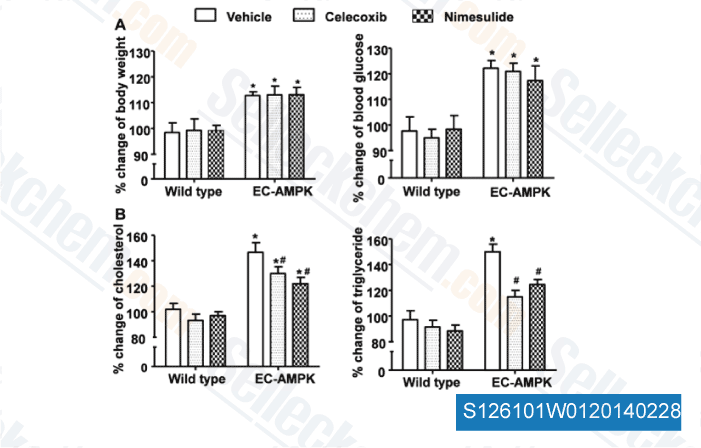
<p>Reduced hepatic lipid contents and alleviated liver injury in EC-AMPK mice treated with selective COX-2 inhibitors. Wild-type and EC-AMPK mice given a high fat diet were treated with vehicle, celecoxib or nimesulide for a period of 4 weeks. At the end of treatment, parameters including body weight and circulating glucose (A), serum triglyceride and cholesterol levels (B were measured and presented as percentage comparisons against those from vehicle-treated wild-type mice. *<em>P</em> < 0.05 versus wild-type mice treated with vehicle; #<em>P</em> < 0.05 versus EC-AMPK mice treated with vehicle, <em>n</em> = 3-5.</p>

Daten von [ Br J Pharmacol , 2014 , 171(2), 498-508 ]
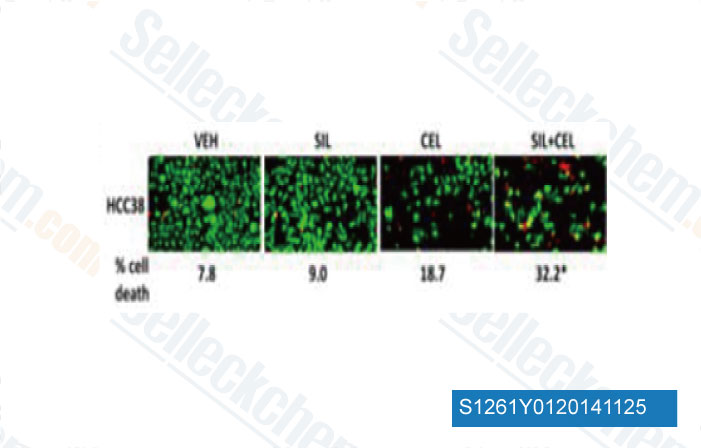
Breast cancer cells, wild type (WT) or anoikis resistant (AR) variants, were treated with celecoxib (CEL 5.0 uM) and/or sildenafil (SIL, 2.0 uM). Cells were isolated after 24h and viability determined by trypan blue exclusion (n = 3, +/- SEM) * p < 0.05 greater than corresponding value in vehicle control. Upper inset pictures: HCC38 cells in 96 well plates were treated with celecoxib (CEL 5.0 uM) and/or sildenafil (SIL, 2.0 uM). Cells were isolated after 24h and viability determined using a live-dead assay (red cells = dead; green cells = alive) (n = 3, +/- SEM) * p < 0.05 greater than corresponding value in vehicle control.

Daten von [ J Cell Physiol , 2014 , 10.1002/jcp.24843 ]
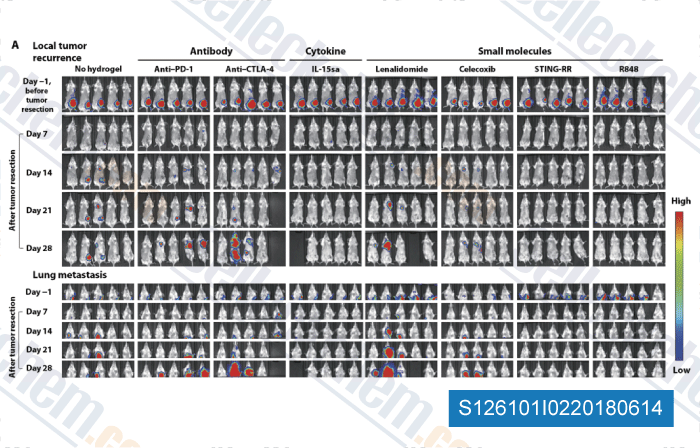
Tumors were resected from mice 10 days after orthotopic inoculation of 4T1-Luc2 cells, and hydrogels loaded with the following payloads were evaluated: anti–PD-1, anti-CTLA-4, IL-15sa, lenalidomide, celecoxib, STING-RR, or R848. Mice that did not receive a hydrogel were examined as a negative control. (A) IVIS imaging of 4T1-Luc2 cells is shown for all groups described and illustrates tumor burden.

Daten von [ , , Science, 2018, 10(433), doi: 10.1126/scitranslmed.aar1916 ]
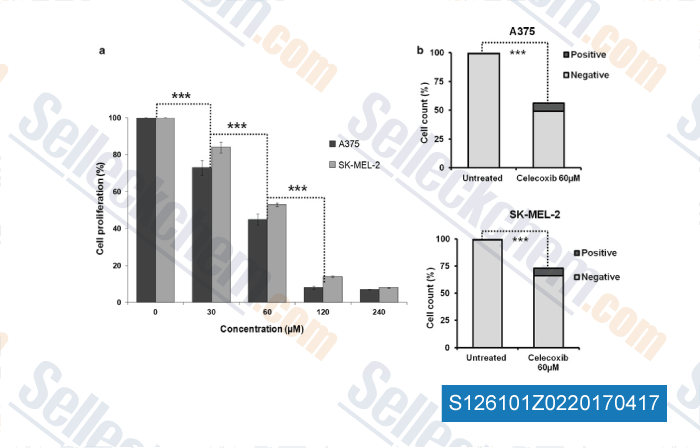
Effect of celecoxib on the in vitro proliferation of BRAFV600E and NRASQ61R melanoma cell lines. a BRAFV600E A375 and NRASQ61R SK-MEL-2 melanoma cells were seeded at the density of 3 × 10<sup>3</sup> per well in a 96-well plate and incubated with the indicated concentrations of celecoxib. Untreated cells were used as a control. DMSO (vehicle of celecoxib) concentration was maintained at 0.02% in all wells. Following a 24 h incubation at 37℃ in a 5% CO2 atmosphere, growth inhibition was determined by MTT assay. Data are expressed as mean percent of proliferation ± SD of treated cells as compared to untreated control cells. Mean percent of proliferation and SD were calculated from three independent experiments performed in triplicate. Difference between doses of celecoxib was calculated using unpaired t-test. *** indicate P < 0.001. b BRAFV600E A375 and NRASQ61R SK-MEL-2 melanoma cells were seeded at the density of 4 × 10<sup>5</sup> per well in a 75 cm<sup>2</sup> tissue culture flask and incubated with celecoxib (60 μM). Untreated cells were used as a control. DMSO (vehicle of celecoxib) concentration was maintained at 0.02% in all wells. Following a 24 h incubation at 37℃ in a 5% CO2 atmosphere, viability of cells was determined by trypan blue assay. Data are expressed as mean percentage of viable (negative) and death cells (positive) of treated cells as compared to untreated control cells. *** indicate P < 0.001

Daten von [ , , J Transl Med, 2017, 15(1):46 ]

Sellecks Celecoxib (SC-58635) Wurde zitiert von 115 Publikationen

Tumor-initiating stem cells fine-tune the plasticity of neutrophils to sculpt a protective niche [ Cancer Cell, 2025, S1535-6108(25)00494-5] PubMed: 41349542
Monkeypox virus induces ferroptosis to facilitate viral replication and promotes inflammatory responses [ Emerg Microbes Infect, 2025, 14(1):2522877] PubMed: 40536397
The nonsteroidal anti-inflammatory drug sulindac reverses obesity-driven immunosuppression and triple-negative breast cancer progression [ Breast Cancer Res, 2025, 27(1):186] PubMed: 41137072
Carbonic anhydrase 2-derived drug-responsive domain regulates membrane-bound cytokine expression and function in engineered T cells [ Commun Biol, 2025, 8(1):28] PubMed: 39789216
Hyperoxia-activated Nrf2 regulates ferroptosis in intestinal epithelial cells and intervenes in inflammatory reaction through COX-2/PGE2/EP2 pathway [ Mol Med, 2025, 31(1):1] PubMed: 39754066
Protein kinase a suppresses antiproliferative effect of interferon-α in hepatocellular carcinoma by activation of protein tyrosine phosphatase SHP2 [ J Biol Chem, 2025, 301(2):108195] PubMed: 39826687
Missense Mutant p53 Transactivates Wnt/β-Catenin Signaling in Neighboring p53-Destabilized Cells through the COX-2/PGE2 Pathway [ Cancer Res Commun, 2025, 5(1):13-23] PubMed: 39641656
Leptin-mediated suppression of lipoprotein lipase cleavage enhances lipid uptake and facilitates lymph node metastasis in gastric cancer [ Cancer Commun (Lond), 2024, 10.1002/cac2.12583] PubMed: 38958445
Therapeutic Anti-Tumor Efficacy of DC-Based Vaccines Targeting TME-Associated Antigens Is Improved When Combined with a Chemokine-Modulating Regimen and/or Anti-PD-L1 [ Vaccines (Basel), 2024, 12(7)777] PubMed: 39066414
Celecoxib Combined with Tocilizumab Has Anti-Inflammatory Effects and Promotes the Recovery of Damaged Cartilage via the Nrf2/HO-1 Pathway In Vitro [ Biomolecules, 2024, 14(12)1636] PubMed: 39766343

RÜCKGABERICHTLINIE
Die bedingungslose Rückgaberichtlinie von Selleck Chemical gewährleistet unseren Kunden ein reibungsloses Online-Einkaufserlebnis. Wenn Sie in irgendeiner Weise mit Ihrem Kauf unzufrieden sind, können Sie jeden Artikel innerhalb von 7 Tagen nach Erhalt zurückgeben. Im Falle von Produktqualitätsproblemen, sei es protokollbezogene oder produktbezogene Probleme, können Sie jeden Artikel innerhalb von 365 Tagen ab dem ursprünglichen Kaufdatum zurückgeben. Bitte befolgen Sie die nachstehenden Anweisungen, wenn Sie Produkte zurücksenden.

VERSAND UND LAGERUNG
Selleck-Produkte werden bei Raumtemperatur transportiert. Wenn Sie das Produkt bei Raumtemperatur erhalten, seien Sie versichert, dass die Qualitätskontrollabteilung von Selleck Experimente durchgeführt hat, um zu überprüfen, dass die normale Temperaturplatzierung von einem Monat die biologische Aktivität von Pulverprodukten nicht beeinträchtigt. Nach dem Sammeln lagern Sie das Produkt bitte gemäß den in der Datenblatt beschriebenen Anforderungen. Die meisten Selleck-Produkte sind unter den empfohlenen Bedingungen stabil.

NICHT FÜR DIE ANWENDUNG AM MENSCHEN, FÜR VETERINÄRMEDIZINISCHE DIAGNOSTIK ODER THERAPEUTISCHE ZWECKE.