Sorafenib Tosylate (BAY 43-9006)

Katalog-Nr.S1040 Charge:S104004

Drucken

Technische Daten

Formel

C21H16ClF3N4O3.C7H8O3S

Molekulargewicht 637.03 CAS-Nr. 475207-59-1
Löslichkeit (25°C)* In vitro DMSO 127 mg/mL (199.36 mM)
Water 0.01 mg/mL (0.01 mM)
Ethanol Insoluble
In vivo (Lösungsmittel einzeln und der Reihe nach zum Produkt hinzufügen.)
Homogeneous suspension
CMC-NA
≥5mg/ml Taking the 1 mL working solution as an example, add 5 mg of this product to 1 ml of CMC-Na solution, mix evenly to obtain a homogeneous suspension with a final concentration of 5 mg/ml.
Clear solution
5%DMSO 40%PEG 300 5%Tween80 50% ddH2O

Validiert von Selleck Labs. Sollten Sie Anpassungen an dieser Formulierung benötigen, wenden Sie sich an unser Vertriebsteam für kundenspezifische Tests.

4.900mg/ml (7.69mM) Taking the 1 mL working solution as an example, add 50 μL of 98 mg/mL clarified DMSO stock solution to 400 μL PEG300, mix evenly to clarify; add 50 μL Tween-80 to the above system, mix evenly to clarify; Then continue to add 500 μL ddH2O to adjust the volume to 1 mL. The mixed solution should be used immediately for optimal results. 
Clear solution
5%DMSO 95% Corn oil

Validiert von Selleck Labs. Sollten Sie Anpassungen an dieser Formulierung benötigen, wenden Sie sich an unser Vertriebsteam für kundenspezifische Tests.

4.900mg/ml (7.69mM) Taking the 1 mL working solution as an example, add 50 μL of 98 mg/ml clear DMSO stock solution to 950 μL of corn oil and mix evenly. The mixed solution should be used immediately for optimal results. 
* <1 mg/ml bedeutet schwer löslich oder unlöslich.
* Bitte beachten Sie, dass Selleck die Löslichkeit aller Verbindungen intern testet und die tatsächliche Löslichkeit geringfügig von veröffentlichten Werten abweichen kann. Dies ist normal und ist auf geringfügige Batch-zu-Batch-Variationen zurückzuführen.
* Versand bei Raumtemperatur (Stabilitätstests zeigen, dass dieses Produkt ohne Kühlmaßnahmen versendet werden kann.)

Vorbereitung von Stammlösungen

Biologische Aktivität

Beschreibung Sorafenib Tosylate ist ein Multikinase-Inhibitor von Raf-1 und B-Raf mit einem IC50 von 6 nM bzw. 22 nM in zellfreien Assays. Sorafenib Tosylate hemmt VEGFR-2, VEGFR-3, PDGFR-β, Flt-3 und c-KIT mit IC50-Werten von 90 nM, 20 nM, 57 nM, 59 nM bzw. 68 nM. Sorafenib Tosylate induziert autophagy und apoptosis und aktiviert ferroptosis mit Antitumoraktivität.
Ziele
Raf-1
(Cell-free assay)
VEGFR2/Flk1
(Cell-free assay)
B-Raf
(Cell-free assay)
B-Raf (V599E)
(Cell-free assay)
PDGFRβ
(Cell-free assay)
Mehr anzeigen
6 nM 15 nM 22 nM 38 nM 57 nM
In vitro

Sorafenib tosylate hemmt sowohl die Wildtyp- als auch die V599E-Mutante-B-Raf-Aktivität mit einer IC50 von 22 nM bzw. 38 nM. Diese Verbindung hemmt auch mVEGFR2 (Flk-1), mVEGFR3, mPDGFRβ, FLT3 und c-Kit mit einer IC50 von 15 nM, 20 nM, 57 nM, 58 nM bzw. 68 nM. Sie hemmt FGFR-1 schwach mit einem IC50-Wert von 580 nM. Diese Chemikalie ist nicht aktiv gegen ERK-1, MEK-1, EGRF, HER-2, IGFR-1, c-Met, PKB, PKA, cdk1/CyclinB, PKCα, PKCγ und pim-1. Es hemmt deutlich die VEGFR2-Phosphorylierung in NIH 3T3-Zellen mit einer IC50 von 30 nM und die FLT-3-Phosphorylierung in HEK-293-Zellen mit einer IC50 von 20 nM. Es blockiert wirksam die MEK 1/2- und ERK 1/2-Phosphorylierung in den meisten Zelllinien, jedoch nicht in A549- oder H460-Zellen, während es keine Wirkung auf die Hemmung des PKB-Signalwegs hat. Es hemmt die Proliferation von HAoSMC- und MDA-MB-231-Zellen mit einer IC50 von 0,28 μM bzw. 2,6 μM. Zusätzlich zur Hemmung des Raf/MEK/ERK-Signalwegs hemmt es signifikant die Phosphorylierung von eIF4E und reguliert die Mcl-1-Spiegel in Hepatozellulären Karzinomzellen (HCC) auf MEK/ERK-unabhängige Weise herunter. Es hemmt die Proliferation von PLC/PRF/5- und HepG2-Zellen mit einer IC50 von 6,3 μM bzw. 4,5 μM und führt zu einer signifikanten Induktion der Apoptosis.

In vivo

Die orale Verabreichung von Sorafenib tosylate (~60 mg/kg) zeigt eine breite, dosisabhängige Antitumoraktivität gegen eine Vielzahl von menschlichen Tumoren in Xenotransplantatmodellen, darunter MDA-MB-231, Colo-205, HT-29, DLD-1, NCI-H460 und A549, ohne Anzeichen von Toxizität. In Verbindung mit der Antitumorwirksamkeit hemmt diese Verbindung wirksam die MEK 1/2-Phosphorylierung und die pPERK 1/2-Spiegel in HT-29- und MDA-MB-231-Xenotransplantaten, jedoch nicht in Colo-205-Xenotransplantaten, und unterdrückt signifikant die Tumormikrogefäßfläche (MVA) und die Mikrogefäßdichte (MVD) in MDA MB-231-, HT-29 und Colo-205-Tumor-Xenotransplantaten. Diese Kombinationsbehandlung bewirkt eine dosisabhängige Wachstumshemmung von PLC/PRF/5-Tumor-Xenotransplantaten in SCID-Mäusen mit TGIs von 49 % bzw. 78 % bei 10 mg/kg und 30 mg/kg, was mit der Hemmung der ERK- und eIF4E-Phosphorylierung, der Verringerung der Mikrogefäßfläche und der Induktion der Apoptosis von Tumorzellen übereinstimmt.

Protokoll (aus Referenz)

Kinase-Assay:

[1]

  • Biochemische Assays

    Rekombinante Baculoviren, die Raf-1 (Reste 305–648) und B-Raf (Reste 409–765) exprimieren, werden als Fusionsproteine gereinigt. Vollständiges humanes MEK-1 wird durch PCR erzeugt und als Fusionsprotein aus Escherichia coli-Lysaten gereinigt. Sorafenib-Tosylat wird zu einer Mischung aus Raf-1 (80 ng) oder B-Raf (80 ng) mit MEK-1 (1 μg) in Assay-Puffer [20 mM Tris (pH 8,2), 100 mM NaCl, 5 mM MgCl₂ und 0,15 % β-Mercaptoethanol] in einer Endkonzentration von 1 % DMSO. Der Raf-Kinase-Assay (Endvolumen 50 μl) wird durch Zugabe von 25 μl 10 μM γ[33P]ATP (400 Ci/mol) gestartet und 25 Minuten lang bei 32 °C inkubiert. Phosphoryliertes MEK-1 wird durch Filtration auf einer Phosphocellulosematte gesammelt, und 1 %ige Phosphorsäure wird verwendet, um ungebundene Radioaktivität wegzuwaschen. Nach dem Trocknen durch Mikrowellenerwärmung wird ein β-Plattenzähler verwendet, um die filtergebundene Radioaktivität zu quantifizieren. Die Kinasedomäne des humanen VEGFR2 (KDR) wird aus Sf9-Lysaten exprimiert und gereinigt. Zeitaufgelöste Fluoreszenzenergietransfer-Assays für VEGFR2 werden in 96-Well-Platten im Format des zeitaufgelösten Fluoreszenzenergietransfers durchgeführt. Die endgültigen Reaktionsbedingungen sind wie folgt: 1 bis 10 μM ATP, 25 nM Poly-GT-Biotin, 2 nM europiummarkierter Phospho-(p)-Tyr-Antikörper (PY20), 10 nM APC, 1 bis 7 nM zytoplasmatische Kinasedomäne in Endkonzentrationen von 1 % DMSO, 50 mM HEPES (pH 7,5), 10 mmol/L MgCl, 0,1 mmol/L EDTA, 0,015 % Brij-35, 0,1 mg/ml BSA und 0,1 % β-Mercaptoethanol. Das Reaktionsvolumen beträgt 100 μl und die Reaktion wird durch Zugabe des Enzyms gestartet. Die Platten werden sowohl bei 615 als auch bei 665 nm auf einem Perkin-Elmer VictorV Multilabel-Zähler etwa 1,5 bis 2,0 Stunden nach Reaktionsbeginn ausgelesen. Das Signal wird als Verhältnis berechnet: (665 nm/615 nm) × 10.000 für jede Vertiefung. Zur Ermittlung des IC50-Werts wird diese Verbindung vor der Enzymaktivierung hinzugefügt. Eine 50-fache Stammlösung wird mit dieser Chemikalie hergestellt, die in einer 50 %igen DMSO/50 %igen destillierten Wasserlösung 1:3 seriell verdünnt wird. Die Endkonzentrationen dieser Verbindung liegen zwischen 10 μM und 4,56 nM in 1 % DMSO.

Zell-Assay:

[1]

  • Zelllinien

    MDA-MB-231, and HAoSMC

  • Konzentrationen

    Dissolved in DMSO, final concentrations ~10 μM

  • Inkubationszeit

    72 hours

  • Methode

    Cells are exposed to increasing concentrations of Sorafenib tosylate for 72 hours. Cell number is quantitated using the Cell TiterGlo ATP Luminescent assay kit. This assay measures the number of viable cells per well by measurement of luminescent signal based on amount of cellular ATP.

Tierstudie:

[1]

  • Tiermodelle

    Female NCr-nu/nu mice implanted s.c. with MDA-MB-231, Colo-205, HT-29, H460, or A549 cells

  • Dosierungen

    ~60 mg/kg

  • Verabreichung

    Orally once daily

Referenzen

  • https://pubmed.ncbi.nlm.nih.gov/15466206/
  • https://pubmed.ncbi.nlm.nih.gov/17178882/
  • https://pubmed.ncbi.nlm.nih.gov/17613437/

Kundenproduktvalidierung

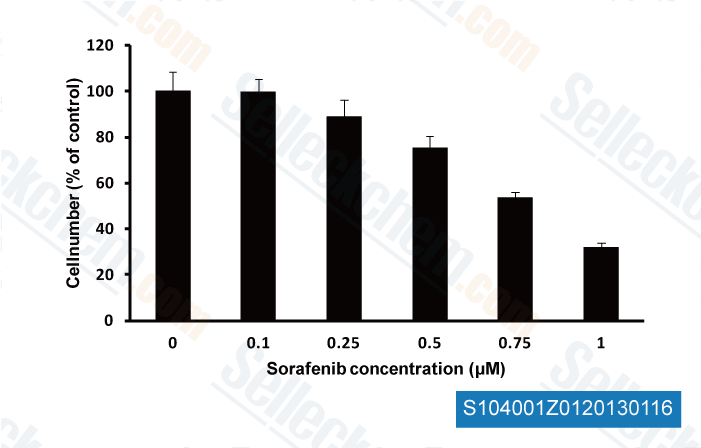
<p> </p><p>Inhibition of breast cancer cell growth using sorafenib. MCF-7 breast cancer cells were treated with increasing concentrations of sorafenib for 5 days. Cell number was measured  using a colorimetric growth assay (crystal violet stain) and expressed relative to DMSO treated control cells.</p>

, 2013 , Christina W Yde/CDM Danish Cancer Society Research Center Denmark
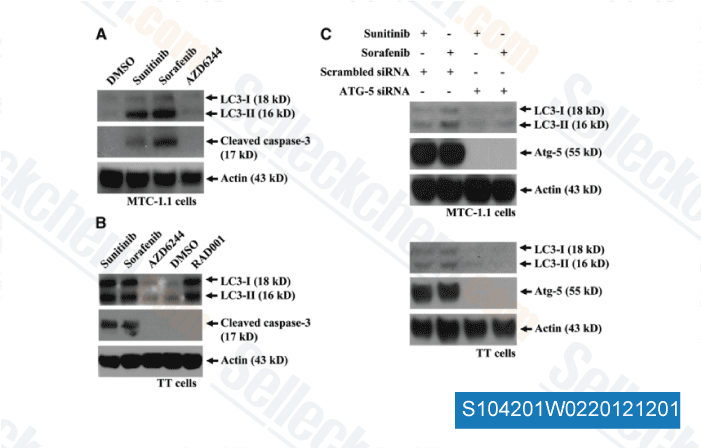
<p>Autophagic activation in sunitinib- and sorafenib- but not AZD6244-treated cells. Medullary thyroid cancer-1.1 (MTC-1.1; A) and TT ( B) cells were treated with dimethyl sulfoxide (DMSO), sunitinib (50 nM), sorafenib (10 nM), AZD6244 (30 nM), or everolimus (20 nM) for 48 hours. Cell lysates were prepared, and light chain 3 (LC3)-I and -II cleaved caspase-3 protein levels were monitored by Western blotting. Reprobing against actin was per formed to ensure equal protein loading. ( C ) MTC-1.1 and TT cells were transiently transfected with autophagy protein 5 (Atg-5) small inter fering RNA. Transfection with scrambled small inter fering RNA was used as a control. After transfection, cells with and without Atg-5 knockdown were exposed to DMSO or 20 nM of everolimus for 48 hours. Cell lysates were pre- pared and LC3-I and -II protein expression levels were monitored by Western blotting. Reprobing against Atg-5 was per formed to monitor Atg-5 knockdown efficiency. Reprobing against actin was per formed to ensure equal protein.</p>

Daten von [ Surgery , 2012 , 152(6), 1142-9 ]
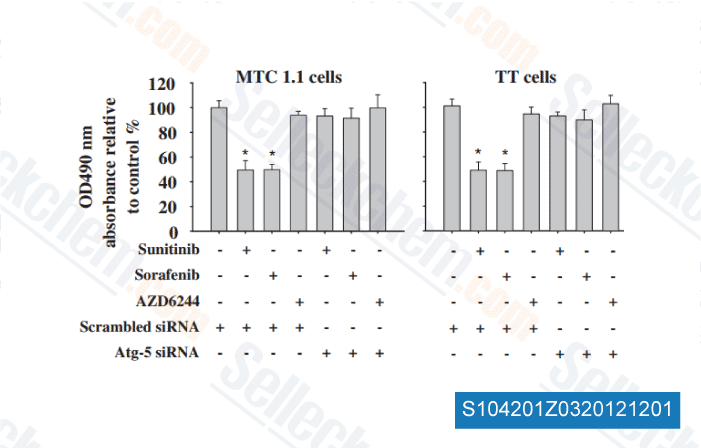
<p>Autophagy inhibition blocks the antiproliferative effects of sunitinib and sorafenib but not AZD6244. Medullary thyroid cancer–1.1 (MTC-1.1) and TT cells were transfected transiently with scrambled or autophagy protein 5 (Atg-5) small inter fering RNA. After transfection, cells with and without Atg-5 knockdown were exposed to sunitinib (50 nM), sorafenib (10 nM), and AZD6244 (30 nM) for 48 hours. Treated cells were subjected to a 3-(4,5-dimethylthiazol-2-yl)-5-(3-carboxymethoxyphenyl)-2-(4-sulfophenyl)-2H-tetrazolium proliferation assay. Similar experiments were repeated 3 times. Histograms represent the relative percent of OD490 nM absorbance. The asterisk indicates significance versus scrambled small inter fering RNA–treated control ( P < .05). All data are relative multiples of expression compared to untreated cells. The data are representative of 3 experiments and are expressed as the mean ± the standard error.</p>

Daten von [ Surgery , 2012 , 152(6), 1142-9 ]
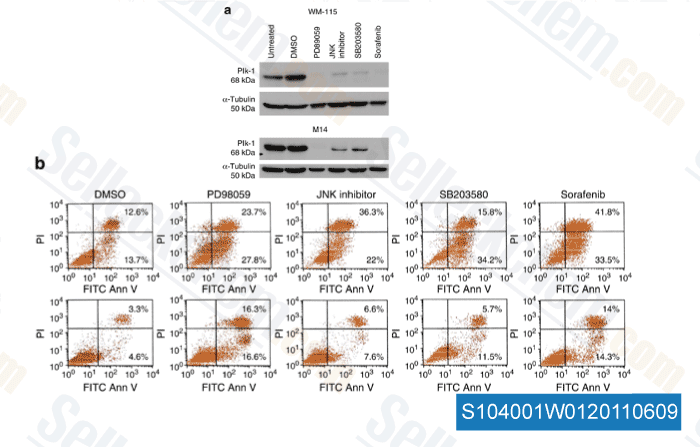
<p>Inhibition of the MAPK signaling pathway results in downregulation of Plk-1 protein expression. (a) WB analysis for Plk-1 protein after treatment of human melanoma cell lines M14 and WM-115 with MEK 1/2 inhibitor PD98059 (10 μM), JNK inhibitor (16 μM), p38 inhibitor SB203580 (20 μM), and multikinase inhibitor sorafenib (10 μM) for 48 h showing significant reduction in the expression of Plk-1 protein after 48 hours. (b) Annexin V/PI staining of cells treated with MAPK inhibitors and induction of apoptosis. JNK, c-Jun N-terminal kinase; MAPK, mitogen-activated protein kinase; MEK 1/2, mitogen-activated protein kinase kinase 1/2; Plk-1, polo-like kinase 1; WB, western blot.</p>

Daten von [ J Invest Dermatol , 2011 , 131, 1886–1895 ]

Sellecks Sorafenib Tosylate (BAY 43-9006) Wurde zitiert von 274 Publikationen

Inhibiting SSBP1 enhances ferroptosis and improves the effectiveness of sorafenib treatment for liver cancer [ Int J Oncol, 2025, 67(3)72] PubMed: 40747667
Tumour-selective activity of RAS-GTP inhibition in pancreatic cancer [ Nature, 2024, 629(8013):927-936] PubMed: 38588697
Targeting NG2 relieves the resistance of BRAF-mutant thyroid cancer cells to BRAF inhibitors [ Cell Mol Life Sci, 2024, 81(1):238] PubMed: 38795180
Mitochondrial GCN5L1 acts as a novel regulator for iron homeostasis to promote sorafenib sensitivity in hepatocellular carcinoma [ J Transl Med, 2024, 22(1):593] PubMed: 38918793
IL-22 signaling promotes sorafenib resistance in hepatocellular carcinoma via STAT3/CD155 signaling axis [ Front Immunol, 2024, 15:1373321] PubMed: 38596684
Patient-derived rhabdomyosarcoma cells recapitulate the genetic and transcriptomic landscapes of primary tumors [ iScience, 2024, 27(10):110862] PubMed: 39319271
EZH2 suppresses ferroptosis in hepatocellular carcinoma and reduces sorafenib sensitivity through epigenetic regulation of TFR2 [ Cancer Sci, 2024, 115(7):2220-2234] PubMed: 38623968
Upregulation of LHPP by saRNA inhibited hepatocellular cancer cell proliferation and xenograft tumor growth [ PLoS One, 2024, 19(5):e0299522] PubMed: 38696452
Gravitational and mechanical forces drive mitochondrial translation [ bioRxiv, 2024, 10.1101/2023.01.18.524628] PubMed: none
Arginine reprograms metabolism in liver cancer via RBM39 [ Cell, 2023, 186(23):5068-5083.e23] PubMed: 37804830

RÜCKGABERICHTLINIE
Die bedingungslose Rückgaberichtlinie von Selleck Chemical gewährleistet unseren Kunden ein reibungsloses Online-Einkaufserlebnis. Wenn Sie in irgendeiner Weise mit Ihrem Kauf unzufrieden sind, können Sie jeden Artikel innerhalb von 7 Tagen nach Erhalt zurückgeben. Im Falle von Produktqualitätsproblemen, sei es protokollbezogene oder produktbezogene Probleme, können Sie jeden Artikel innerhalb von 365 Tagen ab dem ursprünglichen Kaufdatum zurückgeben. Bitte befolgen Sie die nachstehenden Anweisungen, wenn Sie Produkte zurücksenden.

VERSAND UND LAGERUNG
Selleck-Produkte werden bei Raumtemperatur transportiert. Wenn Sie das Produkt bei Raumtemperatur erhalten, seien Sie versichert, dass die Qualitätskontrollabteilung von Selleck Experimente durchgeführt hat, um zu überprüfen, dass die normale Temperaturplatzierung von einem Monat die biologische Aktivität von Pulverprodukten nicht beeinträchtigt. Nach dem Sammeln lagern Sie das Produkt bitte gemäß den in der Datenblatt beschriebenen Anforderungen. Die meisten Selleck-Produkte sind unter den empfohlenen Bedingungen stabil.

NICHT FÜR DIE ANWENDUNG AM MENSCHEN, FÜR VETERINÄRMEDIZINISCHE DIAGNOSTIK ODER THERAPEUTISCHE ZWECKE.