
nur für Forschungszwecke
Mitoxantrone Topoisomerase Inhibitor
Kat.-Nr.S1889
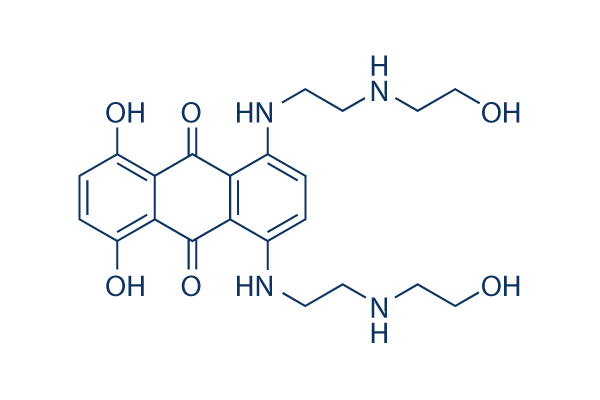
Chemische Struktur
Molekulargewicht: 444.48
Qualitätskontrolle
| Verwandte Ziele | CDK HSP PD-1/PD-L1 ROCK Wee1 DNA/RNA Synthesis Microtubule Associated Ras KRas Aurora Kinase |
|---|---|
| Weitere Topoisomerase Inhibitoren | Camptothecin (CPT) Betulinic acid Beta-Lapachone (S)-10-Hydroxycamptothecin Amonafide Voreloxin (SNS-595) hydrochloride Ellagic acid Cu(II)-Elesclomol Hydroxy Camptothecine Rubitecan |
Zellkultur, Behandlung & Arbeitskonzentration
| Zelllinien | Assay-Typ | Konzentration | Inkubationszeit | Formulierung | Aktivitätsbeschreibung | PMID |
|---|---|---|---|---|---|---|
| L1210 cell | Cytotoxic assay | 48 h | Cytotoxic potency required to inhibit L1210 cell growth by 50% after cell drug contact for 48 hrs, IC50=4e-05 μM | |||
| human HL60 cells | Cytotoxic assay | 48 h | Cytotoxicity against human HL60 cells after 48 hrs by MTT assay, GI50=0.33 nM | |||
| MDA435/LCC6 cells | Proliferation assay | Antiproliferative activity against MDA435/LCC6 cells by ELISA, IC50=0.35 nM | ||||
| A2780-cell | Growth inhibition assay | Concentration required to inhibit A2780-cell growth by 50%, IC50=0.55 μM | ||||
| A2780 cell | Cytotoxic assay | 96 h | Cytotoxic potency required to inhibit A2780 cell growth by 50% after cell drug contact for 96 hrs, IC50=0.55 nM | |||
| G-361 cell | Cytotoxic assay | Cytotoxic potency required to inhibit G-361 cell growth by 50%, IC50=0.65 nM | ||||
| HL60 human leukemia cell | Cytotoxic assay | 72 h | Compound was tested in vitro for cytotoxicity against HL60 human leukemia cell line (72 hr exposure to compound), IC50=0.81 nM | |||
| human HL60 cells | Proliferation assay | 72 h | Antiproliferative activity against human HL60 cells after 72 hrs by SRB assay, IC50=2.5 nM | |||
| human K562 cells | Cytotoxic assay | 5 days | Cytotoxicity against human K562 cells after 5 days by XTT assay, IC50=2.6 nM | |||
| CH1-cell | Growth inhibition assay | Concentration required to inhibit CH1-cell growth by 50%, IC50=2.65 nM | ||||
| uterine sarcoma MES-SA cells | Cytotoxic assay | In vitro cytotoxicity against uterine sarcoma MES-SA cells, IC5=3 nM | ||||
| MES-SA cells | Proliferation assay | 72 h | Antiproliferative activity against MES-SA cells by MTT assay after 72 hrs, IC50=3 nM | |||
| A549 cells | Function assay | Tested for inhibitory activity against human tumor cell line A549 (a non small, drug resistant cell line that does not produce P-glycoprotein) of lung carcinoma using sulforhodamine B assay, IC50=3 nM | ||||
| human LoVo cancer cell | Cytotoxic assay | 144 h | Cytotoxicity against human LoVo cancer cell line was determined after 144 hr, IC50=3.3 nM | |||
| P388 cells | Proliferation assay | Antiproliferative activity against P388 cells by ELISA, IC50=4.3 nM | ||||
| MCF-7 | Growth inhibition assay | In vitro inhibition of tumor cell growth in the human mammary tumor MCF-7 system, IC50=5 nM | ||||
| murine L1210 sensitive cell line | Function assay | Anti-tumor activity against murine L1210 sensitive cell line by using MTT assay, IC50=5 nM | ||||
| human Daudi cells | Proliferation assay | 72 h | Antiproliferative activity against human Daudi cells after 72 hrs by MTT assay, IC50=5 nM | |||
| SKOV-3-cell | Growth inhibition assay | Concentration required to inhibit SKOV-3-cell growth by 50%, IC50=5.3 nM | ||||
| human cell line DU145 | Cytotoxic assay | In vitro Cytotoxic activity of compound in comparison with reference compounds in human cell line DU145, IC50=5.6 nM | ||||
| human HCT116 cancer cell line | Cytotoxic assay | 144 h | Cytotoxicity against human HCT116 cancer cell line was determined after 144 hr, IC50=5.8 nM | |||
| OVCAR-3 cell | Function assay | Inhibitory activity against OVCAR-3 cell line, IC50=5.8 nM | ||||
| human MES-SA cells | Proliferation assay | 72 h | Antiproliferative activity against human MES-SA cells after 72 hrs by MTT assay, IC50=6 nM | |||
| human PC3 cancer cell | Cytotoxic assay | 144 h | Cytotoxicity against human PC3 cancer cell line was determined after 144 hr, IC50=7 nM | |||
| MDR cell line K562R | Cytotoxic assay | 72 h | Compound was tested in vitro for cytotoxicity against MDR cell line K562R (72 hr exposure to compound), IC50=7.06 nM | |||
| WiDr cell | Function assay | Activity against human colon carcinoma sensitive WiDr cell line, IC50=8.1 nM | ||||
| MXF7 breast cell line | Function assay | Antitumor activity against human mammary carcinoma sensitive MXF7 breast cell line, IC50=8.7 nM | ||||
| HT-29 cell | Cytotoxic assay | In vitro cytotoxicity was tested against human colon adenocarcinoma HT-29 cell line, IC50=0.01 μM | ||||
| CHO cell line xrs6 | Cytotoxic assay | Cytotoxicity against CHO cell line xrs6, IC50=0.01 μM | ||||
| human HL60 cells | Growth inhibition assay | Growth inhibition of human HL60 cells by Almar blue assay, GI50=0.01 μM | ||||
| HT-29 cells | Cytotoxic assay | Cytotoxicity is determined as the concentration required to inhibit the growth of human colon adenocarcinoma (HT-29) cell line, IC50=0.01 μM | ||||
| human Ishikawa cells | Proliferation assay | 72 h | Antiproliferative activity against human Ishikawa cells after 72 hrs by MTT assay, IC50=0.01 μM | |||
| HEK293 cells | Cytotoxic assay | 72 h | Cytotoxicity against HEK293 cells after 72 hrs by MTT assay, IC50=0.01 μM | |||
| human MKN45 cancer cell | Cytotoxic assay | 144 h | Cytotoxicity against human MKN45 cancer cell line was determined after 144 hr, IC50=0.012 μM | |||
| human LoVo cancer cell | Cytotoxic assay | 1 h | Cytotoxicity against human LoVo cancer cell line was determined after 1 hr, IC50=0.012 μM | |||
| human FM3 cells | Proliferation assay | 72 h | Antiproliferative activity against human FM3 cells after 72 hrs by MTT assay, IC50=0.013 μM | |||
| human HL60 cells | Cytotoxic assay | 48 h | Cytotoxicity against human HL60 cells assessed as cell viability after 48 hrs by celltiter-blue assay, IC50=0.016 μM | |||
| SK-BR-3 cells | Function assay | The IC50 value was measured on human breast cancer cell line SK-BR-3, IC50=0.016 μM | ||||
| human small-cell lung cancer (SCLC) | Cytotoxic assay | Cytotoxicity against human small-cell lung cancer (SCLC), IC50=0.02 μM | ||||
| human HCT116 cells | Cytotoxic assay | 72 h | Cytotoxicity against human HCT116 cells assessed as inhibition of cell proliferation after 72 hrs by MTT assay, IC50=0.022 μM | |||
| human HCT116 cells | Proliferation assay | 72 h | Antiproliferative activity against human HCT116 cells after 72 hrs by MTT assay, IC50=0.025 μM | |||
| A0375 cells | Function assay | Inhibitory activity against human tumor cell line A0375 melanoma, IC50=0.026 μM | ||||
| NCI-H460 cells | Cytotoxic assay | 48 h | Cytotoxicity against human NCI-H460 cells after 48 hrs by resazurin dye assay, EC50=0.03 μM | |||
| CCRF-CEM cells | Cytotoxic assay | 48 h | Cytotoxicity against human CCRF-CEM cells assessed as cell viability after 48 hrs by celltiter-blue assay, IC50=0.036 μM | |||
| human HeLa cells | Proliferation assay | 72 h | Antiproliferative activity against human HeLa cells after 72 hrs by MTT assay, IC50=0.044 μM | |||
| human NCI60 cells | Function assay | 48 h | Antitumor activity against human NCI60 cells after 48 hrs by SRB assay, GI50=0.04786 μM | |||
| UA375 cells | Function assay | Tested for inhibitory activity against human tumor cell line UA375 of melanoma using sulforhodamine B assay, IC50=0.048 μM | ||||
| HT1080 cells | Function assay | Inhibitory activity against human tumor cell line HT1080, IC50=0.066 μM | ||||
| human MES-SA/Dx5 cells | Proliferation assay | 72 h | Antiproliferative activity against human MES-SA/Dx5 cells after 72 hrs by MTT assay, IC50=0.073 μM | |||
| human RKOp27 cells | Proliferation assay | 48 h | Antiproliferative activity against human RKOp27 cells after 48 hrs, EC50=0.09 μM | |||
| human HeLa cells | Cytotoxic assay | 96 h | Cytotoxicity against human HeLa cells expressing telomerase after 96 hrs by MTT assay, IC50=0.1 μM | |||
| human SKOV3 cells | Proliferation assay | 48 h | Antiproliferative activity against human SKOV3 cells after 48 hrs, EC50=0.12 μM | |||
| human NCI-H460 cells | Proliferation assay | 48 h | Antiproliferative activity against human NCI-H460 cells after 48 hrs, EC50=0.12 μM | |||
| A549 cells | Cytotoxic assay | In vitro cytotoxic activity against human lung A549 cell line ( standard deviation in parenthesis), IC50=0.3 μM | ||||
| SF268 cells | Proliferation assay | 48 h | Antiproliferative activity against human SF268 cells after 48 hrs, EC50=0.32 μM | |||
| human KB/HeLa cells | Proliferation assay | 48 h | Antiproliferative activity against human KB/HeLa cells after 48 hrs, EC50=0.36 μM | |||
| K562 cells | Growth inhibition assay | 72 h | Growth inhibition of human K562 cells after 72 hrs by MTS method, IC50=0.42 μM | |||
| MDA-MB-231 cells | Proliferation assay | Antiproliferative activity against human MDA-MB-231 cells, IC50=0.96 μM | ||||
| SF268 cells | Cytotoxic assay | 48 h | Cytotoxicity against human SF268 cells after 48 hrs by SRB assay, GI50=0.97 μM | |||
| MDA435/LCC6 cells | Proliferation assay | Antiproliferative activity against multidrug resistant MDA435/LCC6 cells by ELISA, IC50=1.442 μM | ||||
| U937 cells | Cytotoxic assay | Cytotoxicity against human U937 cells by MTT assay, IC50=6.2 μM | ||||
| A549 cells | Cytotoxic assay | Cytotoxicity against human A549 cells by MTT assay, IC50=7.8 μM | ||||
| HT-29 cell line | Proliferation assay | Inhibitory concentration of compound against proliferation of colon carcinoma HT-29 cell line, IC50=8 μM | ||||
| HepG2 cells | Proliferation assay | 48 h | Antiproliferative activity against human HepG2 cells after 48 hrs by MTT assay, IC50=11.05 μM | |||
| Klicken Sie hier, um weitere experimentelle Daten zu Zelllinien anzuzeigen | ||||||
Chemische Informationen, Lagerung & Stabilität
| Molekulargewicht | 444.48 | Formel | C22H28N4O6 |
Lagerung (Ab dem Eingangsdatum) | |
|---|---|---|---|---|---|
| CAS-Nr. | 65271-80-9 | SDF herunterladen | Lagerung von Stammlösungen |
|
|
Löslichkeit
|
In vitro |
DMSO
: 88 mg/mL
(197.98 mM)
Water : Insoluble Ethanol : Insoluble |
Molaritätsrechner
|
In vivo |
|||||
In-vivo-Formulierungsrechner (Klare Lösung)
Schritt 1: Geben Sie die untenstehenden Informationen ein (Empfohlen: Ein zusätzliches Tier zur Berücksichtigung von Verlusten während des Experiments)
Schritt 2: Geben Sie die In-vivo-Formulierung ein (Dies ist nur der Rechner, keine Formulierung. Bitte kontaktieren Sie uns zuerst, wenn es im Abschnitt "Löslichkeit" keine In-vivo-Formulierung gibt.)
Berechnungsergebnisse:
Arbeitskonzentration: mg/ml;
Methode zur Herstellung der DMSO-Stammlösung: mg Wirkstoff vorgelöst in μL DMSO ( Konzentration der Stammlösung mg/mL, Bitte kontaktieren Sie uns zuerst, wenn die Konzentration die DMSO-Löslichkeit der Wirkstoffcharge überschreitet. )
Methode zur Herstellung der In-vivo-Formulierung: Nehmen Sie μL DMSO Stammlösung, dann hinzufügenμL PEG300, mischen und klären, dann hinzufügenμL Tween 80, mischen und klären, dann hinzufügen μL ddH2O, mischen und klären.
Methode zur Herstellung der In-vivo-Formulierung: Nehmen Sie μL DMSO Stammlösung, dann hinzufügen μL Maisöl, mischen und klären.
Hinweis: 1. Bitte stellen Sie sicher, dass die Flüssigkeit klar ist, bevor Sie das nächste Lösungsmittel hinzufügen.
2. Achten Sie darauf, das/die Lösungsmittel der Reihe nach hinzuzufügen. Sie müssen sicherstellen, dass die bei der vorherigen Zugabe erhaltene Lösung eine klare Lösung ist, bevor Sie mit der Zugabe des nächsten Lösungsmittels fortfahren. Physikalische Methoden wie Vortex, Ultraschall oder ein heißes Wasserbad können zur Unterstützung des Lösens verwendet werden.
Wirkmechanismus
| Targets/IC50/Ki |
Topo II
(Cell-free assay) |
|---|---|
| In vitro |
Mitoxantrone induziert in allen untersuchten Patienten DNA-Fragmentierung und die proteolytische Spaltung der Poly(ADP-Ribose)-Polymerase (PARP), einen Marker für die Aktivierung von Caspasen, was zeigt, dass die zytotoxische Wirkung von Mitoxantrone auf die Induktion von Apoptose zurückzuführen ist. Diese Verbindung aktiviert NFkappaB und stimuliert den IkappaBalpha-Abbau in der promyelozytischen Leukämiezelllinie HL60, aber nicht in den Varianten, HL60/MX2-Zellen, denen die Beta-Isoform der Topoisomerase II fehlt und die eine verkürzte Alpha-Isoform exprimieren, was zu einer veränderten subzellulären Verteilung führt. Es hemmt die Proliferation von aktivierten PBMCs, B-Lymphozyten oder antigenspezifischen T-Zelllinien (TCLs), die auf antigenpräsentierenden Zellen (APCs) stimuliert werden, dosisabhängig. Diese Chemikalie induziert bei niedrigen Konzentrationen die Apoptose von PBMCs, Monozyten und DCs, während höhere Dosen eine Zelllyse verursachen.
|
| In vivo |
Mitoxantrone verringert vorübergehend die Wachstumsrate von HID-Xenotransplantaten bei Mäusen, beeinflusst jedoch nicht die von PAC120-Xenotransplantaten. Diese Verbindung führt zu der Schwere der Herzläsionen sowie der Nephropathie und der intestinalen Toxizität bei spontan hypertensiven Ratten. Diese Chemikalie und Eisen(III) bilden einen starken 2:1-Komplex, in dem sie als dreizähniger Ligand wirken kann.
|
Literatur |
|
Technischer Support
Tel: +1-832-582-8158 Ext:3
Wenn Sie weitere Fragen haben, hinterlassen Sie bitte eine Nachricht.

Produkte sind nur für Forschungszwecke bestimmt. Nicht für den menschlichen Gebrauch. Wir verkaufen nicht an Patienten.
©Copyright 2013 Selleck Chemicals. Alle Rechte vorbehalten.